
DSCR Loan Down Payment
Typical LTV, reserves and DC closing costs, with a worked Petworth example at 20% and 25% down.
Read the guideRefinancing
A DSCR cash out refinance in Washington, DC lets investors pull equity from a rental property by qualifying on its rental income instead of personal tax returns or W-2s. DSCR Loans Direct helps DC landlords turn equity into capital for their next deal. Estimate your proceeds with our investor refinance calculator, review the DSCR loan requirements in Washington, DC, and request a quote today.
Or call (866) 791-4411 — speak with a lending expert
A DSCR cash-out refinance in Washington, DC replaces your existing rental property loan with a larger one and pays you the difference in cash. The lender qualifies the new loan on the property’s rent compared with its monthly debt payment, not on your personal income.
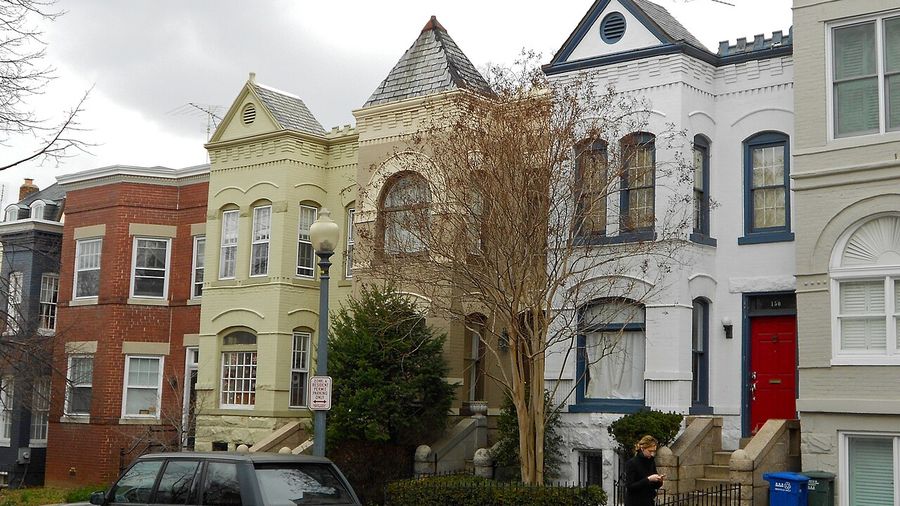
Investors in Capitol Hill, Petworth, Brookland, and H Street often use a cash-out refinance to tap equity built through appreciation or renovations. It works only on non-owner-occupied investment properties, never on a primary residence.
The amount of cash you can take out depends on the property’s appraised value, the lender’s maximum loan-to-value (LTV), your existing loan balance, and whether the new payment still produces an acceptable DSCR. Many DSCR lenders commonly cap cash-out refinances somewhere around 70% to 75% LTV, though limits vary by lender, property, and credit.
Here is a simple example for a DC rowhouse:
The new loan must still cash flow. If rent is $4,200 and the new PITIA is $3,900, the DSCR is $4,200 / $3,900 = 1.08. Learn more in our guide to DSCR ratios in Washington, DC.
Most DSCR lenders review similar criteria for a cash-out refinance. These are typical industry ranges, not DSCR Loans Direct’s terms.
No tax returns are usually needed. Read more about qualifying for a DSCR loan without tax returns in DC.
A cash-out refinance increases your loan balance to put money in your pocket, while a rate-and-term refinance replaces your loan without taking meaningful cash out. Both can be done with a DSCR loan.
Cash-out loans commonly carry slightly lower maximum leverage and may price a bit higher than rate-and-term loans, because the lender takes on more risk. Compare the long-term cost of the larger payment with the return you expect from the cash. If the proceeds will not earn more than the added cost, a smaller cash-out amount or a rate-and-term refinance may be the smarter move.
Washington, DC has local costs and rules that can affect your refinance proceeds and rental income.
This is not legal or tax advice. Confirm tax and regulatory questions with a DC attorney or CPA.
Cash-out proceeds are most powerful when they fund the next income-producing move.
Tell us about the property and the financing you need. We’ll respond with next steps.
DSCR Loans Direct is an expert, trusted lender serving Washington, DC investors, along with investors nationwide, from our office in Waldorf, Maryland. Our team brings decades of hands-on real estate investing experience, underwrites on property cash flow, and can often close faster than a conventional lender.
Call (866) 791-4411 or request a term sheet through our investor refinance loan page to get exact terms for your DC rental.
Questions
A DSCR cash-out refinance is a new investment property loan that pays off your existing mortgage and gives you the remaining proceeds in cash. The lender qualifies the loan based on the property’s rental income divided by its monthly principal, interest, taxes, insurance, and association dues. Personal tax returns and W-2s are generally not required. Investors use the cash for down payments, renovations, paying off short-term debt, or other business purposes related to their real estate portfolio.
Many DSCR lenders commonly allow cash-out refinances up to roughly 70% to 75% of the appraised value, minus your existing loan balance and closing costs. The exact limit depends on the lender, property type, credit score, and DSCR. For example, a $700,000 property at 75% supports a $525,000 loan, so a $300,000 payoff leaves about $225,000 before costs. Request a term sheet to confirm the leverage available for your specific Washington, DC rental.
Many DSCR lenders commonly require a seasoning period of about 3 to 12 months before they will use the new appraised value for a cash-out refinance. Before that point, some lenders base the loan on your purchase price plus documented improvements instead. Seasoning rules vary by lender and program, so investors who plan a BRRRR strategy should ask about them before buying. Confirming seasoning upfront helps you plan renovation timelines and the timing of your refinance.
No, a DSCR cash-out refinance generally does not require personal tax returns, W-2s, or pay stubs. The lender focuses on the property’s rental income compared with the new monthly payment. You will typically provide a mortgage payoff statement, leases or an appraisal rent schedule, bank statements for reserves, insurance information, and entity documents if the property is held in an LLC. This makes the process simpler for self-employed investors and landlords with significant tax deductions.
Many DSCR lenders look for a ratio of roughly 1.0 to 1.25 on a cash-out refinance, and some prefer stronger ratios than they require on a purchase. Because a cash-out refinance increases the loan amount, the new monthly payment rises, which lowers the DSCR. Running the numbers before you apply helps you choose a loan amount that keeps the ratio healthy. Requirements vary by lender, so request a quote for your specific property and goals.
Yes, DC can charge recordation tax on the deed of trust for a refinance, but on many refinances the tax applies only to the new principal that exceeds the existing loan balance. That means a cash-out refinance may owe tax on the cash-out portion, while a rate-and-term refinance may owe little or none. Rules and exemptions can be detailed, so confirm the exact amount with your title company and a DC attorney or CPA before closing.
Yes, most DSCR lenders allow cash-out refinances on properties held in an LLC. If the property is currently in your personal name, some lenders let you transfer it to an LLC at or before closing, while others have specific requirements. Expect to provide articles of organization, an operating agreement, an EIN letter, and a certificate of good standing. Lenders usually require personal guarantees from majority members. Consult a DC attorney about the legal and tax effects of transferring title.
Yes, many investors use DSCR cash-out proceeds as the down payment on their next rental property. Because DSCR loans are business-purpose loans, the proceeds are commonly used for investment activities such as acquisitions, renovations, or paying off bridge financing. This strategy can help you grow a DC rental portfolio without waiting years to save new capital. Make sure both properties still produce healthy cash flow after the refinance so your overall portfolio remains stable.
Some DSCR lenders will refinance a vacant rental using the appraiser’s market rent estimate, while others require a signed lease before allowing cash out. Vacant properties may also face lower maximum leverage or stricter terms because income is not yet proven. If a property is vacant because it needs renovation, a bridge or fix-and-flip loan may be more appropriate until the work is finished. Once the property is leased, a DSCR cash-out refinance often becomes much easier.
Ready When You Are
Tell us about the property and the financing you need — we’ll respond with next steps.
Call (866) 791-4411The same qualifying questions we use for an initial funding review, one step at a time.